


Now that you're speaking the same language and there's a clear understanding of the numbers and activities that marketing and sales are responsible for, it's time to take a look at closed-loop reporting.
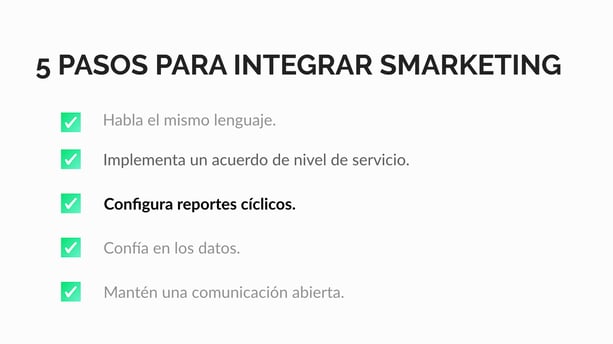
3. Set Up Closed-Loop Reporting
Closed-loop reports complement the feedback between marketing and sales.
In essence, these reports let you pass more intelligence and information about leads to sales and get feedback from them on which of your marketing efforts are translating into customers.
Here are some questions that will help you identify whether your company needs to set up closed-loop reporting:
- Do you send leads to sales and never hear about them again?
- Do you end up creating and trying to manage duplicate leads?
- Do you send leads to sales with the contact's basic information, but without knowing what content that lead has consumed?
- Are you unsure of the impact your marketing efforts have had on sales?
If you answered yes to any of these questions, closed-loop reporting will be key to making your SLA effective.
For example, if the MQLs passed to sales are not good, but sales never notifies marketing, marketing will keep producing low-quality leads and sales will never be able to qualify a single SQL.
Closed-loop reporting allows marketing and sales to improve the conversion rates between funnel stages over time.
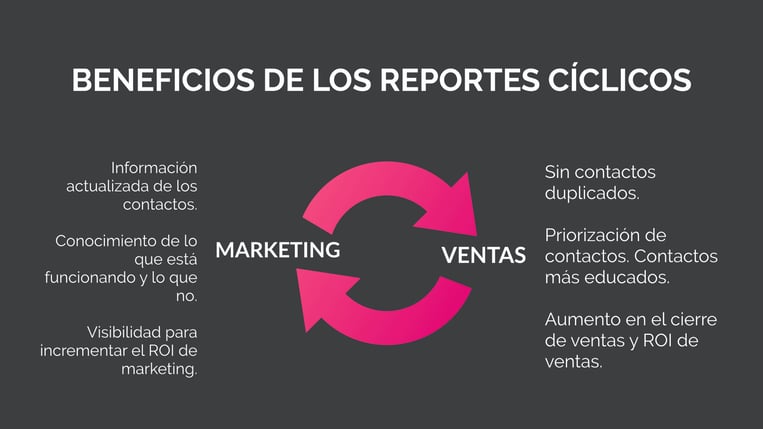
Specifically, closed-loop reporting allows you to:
- Analyze which marketing sources (organic, social, referral, etc.) are producing the most customers.
- Use conversions to help you understand each individual piece of content that is helping close a sale. This will give you statistics on what type of content you can create to convert more leads into customers.
- Have a timeline of all the interactions the contact had before becoming an MQL or a customer, such as the content they downloaded, the emails they clicked, etc.
- Pass information to sales that helps them connect and engage with contacts within the first 24 hours.
- Send automatic updates to your sales team when leads revisit the website or take some other key action, making sure they're followed up with at the right time.
Now that you're gathering information from closed-loop reporting, as well as from typical marketing and sales activities, it's time to start:
4. Trusting the Data to Make Decisions
Marketing and sales dashboards can be a good way to make information available to both teams and help them align to reach the company's goals. They're an excellent tool because they give you up-to-date information that's public, so you can monitor marketing and sales performance.
This allows the team to change course quickly if a problem arises, instead of waiting for end-of-month or end-of-quarter reports.
Some must-have dashboards for Smarketing:
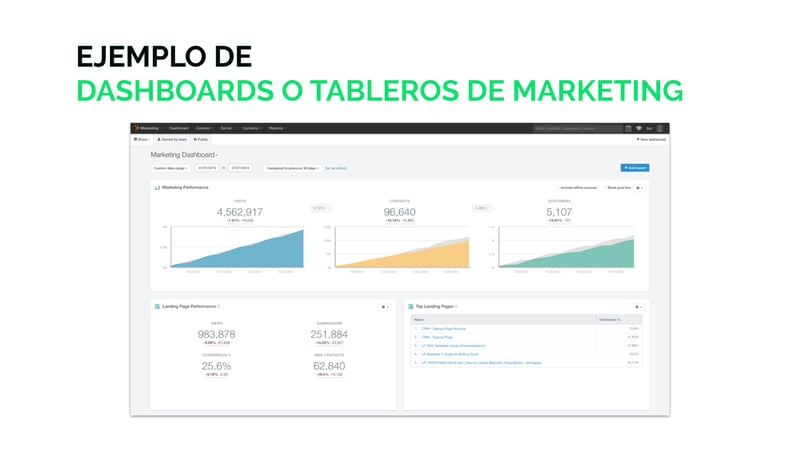
First, let's look at specific dashboards, starting with the SLA; it's key to communicate and prioritize your MQL progress daily, monthly, and each quarter.
This gives you the opportunity to measure the volume and type of marketing qualified leads you're generating for the sales team.
- You can dive into the other key metrics for the marketing team, such as the number of visits, leads, and customers against your monthly goals or compared to previous months, so you can see how much your efforts have helped and make adjustments quickly when necessary.
- You can segment your leads according to the content they've consumed.
- You could even set specific goals for each piece of marketing content to measure the progress of your contacts from email marketing and organic search.
You can also do this for each individual campaign, analyzing the results to learn which marketing efforts have worked and are attracting visits, leads, and customers.
Track the volume of MQLs generated that marketing passes to the sales team day by day.
Apart from the daily report, a monthly report gives you the time needed to analyze why the goal was or wasn't achieved and what needs to improve for the next month.
In addition to the marketing dashboard, you can create a set of sales dashboards.
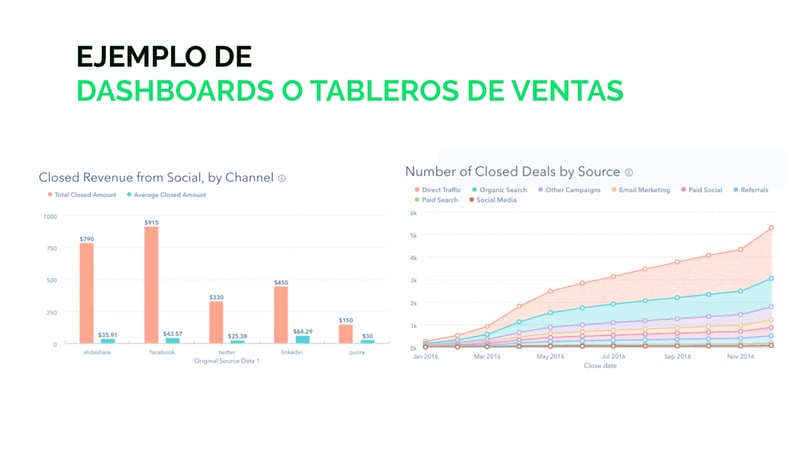
One of the smarketing team's favorites is the “sales by day” dashboard, which lets you measure progress toward sales goals and compare that progress against sales metrics from previous months; in addition to current revenue, you can also see sales activity reports.
These reports provide analytics on the number of leads that were contacted or the number of attempts made to contact each prospect.
This helps you visualize how a team or a sales rep follows up on MQLs and whether they're fulfilling sales' part of the SLA (service level agreement).
When things go well, everyone's happy, but what do you do when things go wrong? When you're behind on your goals, when you don't hit them by the end of the month or the end of the quarter, what do you do? Easy: trust the data to know where you need to improve.
Separate reality from perception. You put all your effort into getting that data; now it's time to use it.
Don't let your emotions and ego interfere with the facts the data gives you. Pointing fingers at someone else doesn't solve problems; collaborating does. Remember that you're all in the same boat, so use the data to figure out what's wrong and how to fix it.
Up to this point, we've relied on technology; the next point is all about maintaining open communication. It's all human interaction.
5. Maintain Open Communication
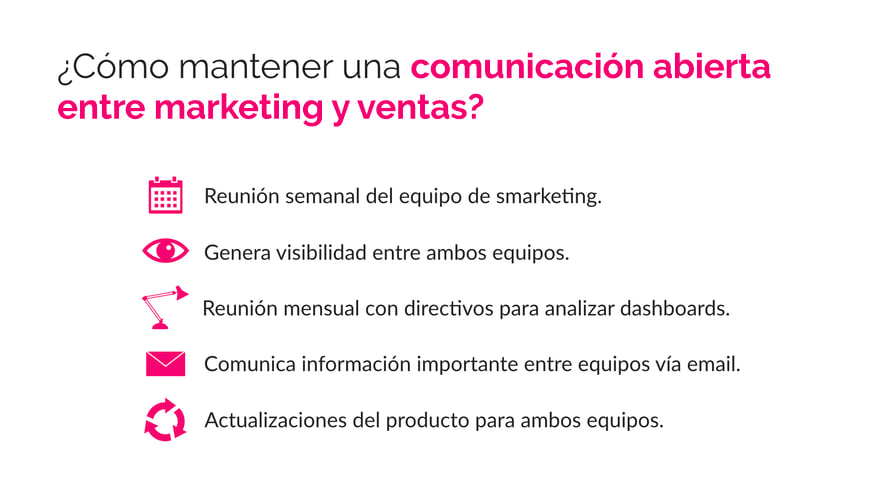
You can start with a weekly smarketing team meeting. This is your opportunity to involve the entire marketing and sales team and get everyone on the same page.
The idea is to do it once a week and be consistent. This meeting is the perfect time to highlight smarketing wins and share important updates about the products or services you offer.
Make sure to include the week's update on the dashboard to create visibility between both teams so they can see how they're progressing on their SLA.
Once a month, you need to meet with leadership to review the data you've gathered in the dashboards.
This meeting is a good way to resolve any issues or address new opportunities. Remember to trust the data, try to keep the meeting focused on it, and don't let feelings get in the way.
In addition to meetings, you can use email to communicate important information between the teams. This is the opportunity for the sales team to see the proposal for the marketing campaigns.
The sales team can be the first audience for your campaigns, which is why it's very important to understand your buyer personas.
Remember that what they're asking themselves is, “How does this help me right now?” Your content must answer that question correctly in an easy, digestible way, so it's best to use bullet points and links.
Another way to add value to emails is with product updates.
Everyone in the company must understand the key details of the product, as well as the updates that have been made and how they affect your users.
As all good marketers know, stories are much more memorable than a list of data or even a dashboard.
Make sure to tell stories. Tell the success stories of sales reps, of the marketing team, or even of technical support.
Stories really are powerful, and they're easy for people to remember. This is also a great opportunity to create content in any format.
So, there you have it:
- Speak the same language
- Implement a service level agreement
- Set up closed-loop reporting
- Trust the data
- Maintain open communication
and you'll be on the right track to achieving 20% annual revenue growth.
That's a lot of information, isn't it?

This involves an effort from each and every member of each team, as well as from leadership.
It won't be easy, but if you're persistent, integrating smarketing into your company will be a career-defining project.
Remember, I'm here to help you.
I'd love to hear from you and learn about your company's success after implementing smarketing, and I'll be very happy to answer any questions you may have along the journey of integrating smarketing into your company.
Keep learning! Subscribe to our blog at digitalegia.com and to our YouTube channel, and don't forget to turn on the notification bell so you'll know the moment we upload a new video.

Don't forget to share this post!