Process Optimization Service for B2B RevOps: A 100-Point Scorecard

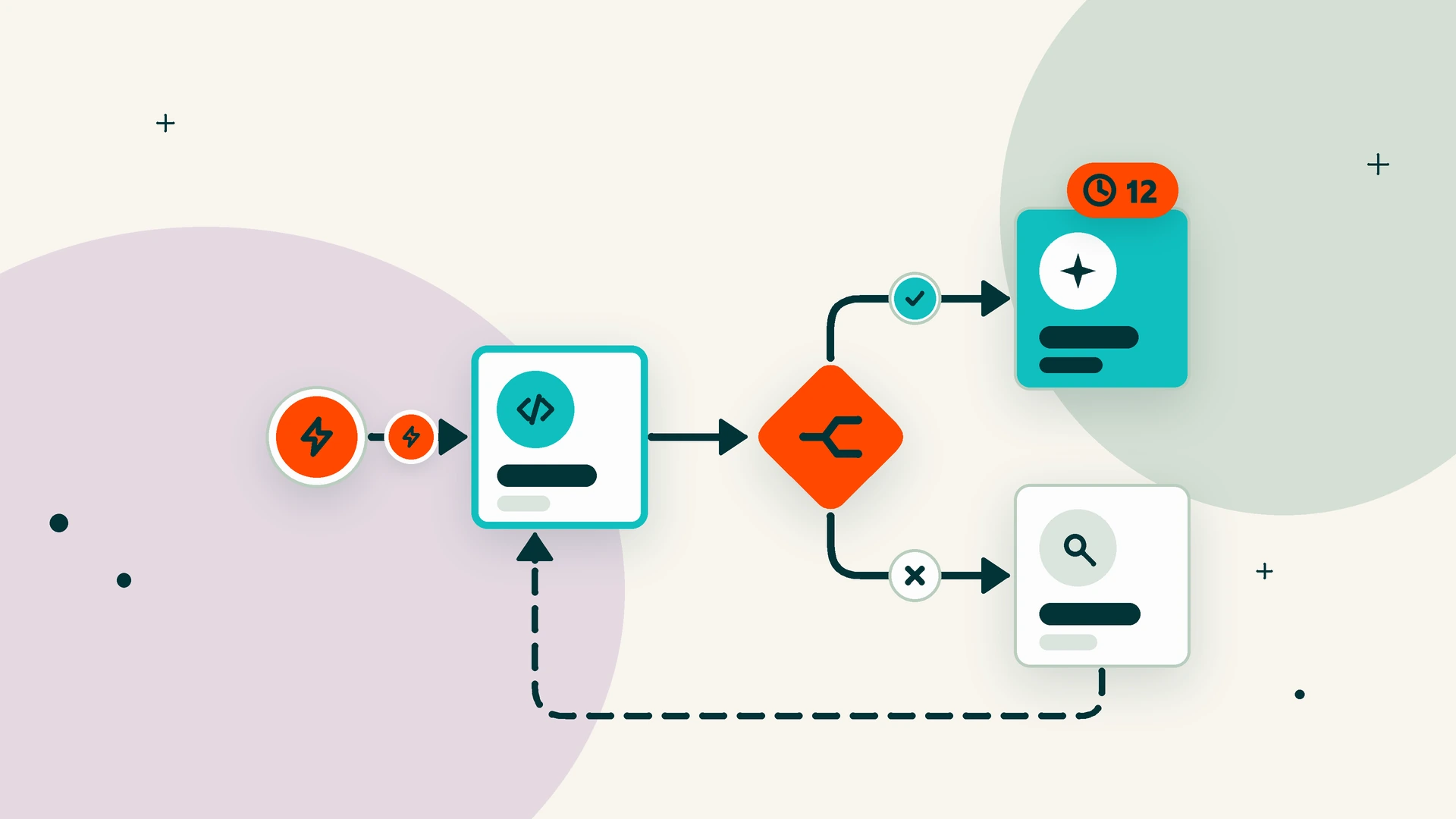
Look for a provider that proves three things before you sign: a structured discovery that ends in written deliverables you keep, an explicit map of the handoffs between marketing, sales and service (lead routing, SLAs, deal to onboarding), and a commitment to baseline metrics measured before and after the work. This post weights those three at 60 of 100 points in a scorecard, with the question to ask and the red-flag answer for each.
Key takeaways
- Score providers on eight weighted criteria, with discovery, handoff mapping and baseline metrics worth 20 points each because you can verify all three in a sales call.
- Treat discovery as a paid phase with deliverables you own: a current-state map, a handoff inventory, data findings, baselines and a prioritized backlog.
- A provider that answers handoff questions with a list of workflows it will build is automating tasks, not mapping who owns a record, what triggers the transfer and how fast the next team must act.
- Write four to six metrics, their formulas and their data sources into the statement of work before any change goes live, then get them reported on a fixed cadence.
- Set a floor of 30 of the 60 core points: a provider below it should not win on pricing, team size or CRM polish alone.
- Canadian and US companies should require consent or opt-out status to travel with every lead handoff and should confirm where their CRM account is hosted during discovery.
What does a process optimization service for revenue operations include, and how is it different from a CRM implementation?
A process optimization service redesigns how leads, deals and customers move between marketing, sales and service, then adjusts your existing CRM to run the new process. A CRM implementation sets up the software; process optimization assumes the software is running and fixes the work that flows through it.
Revenue operations (RevOps) is the function that aligns marketing, sales and service around one revenue process and one set of data. Process optimization, in that context, means finding where revenue work slows down, leaks or gets done by hand, and changing the process so it runs faster and more consistently.
The two services produce different things, so compare proposals against the right one:
| Dimension | CRM implementation | Process optimization |
|---|---|---|
| Starting point | New CRM or a migration | CRM already in daily use |
| Main output | Configured objects, properties, pipelines and integrations | Redesigned handoffs, SLAs, routing rules and documentation |
| How success is judged | System live and adopted | Change in agreed baseline metrics |
| Failure to watch for | Old process copied into new software | A broken step automated so it fails faster |
This post weights handoff mapping as one of its three 20-point criteria because response speed at a handoff is linked to better conversations with buyers. HubSpot's guide to writing sales and marketing service level agreements states that salespeople who follow up with leads within an hour are nearly seven times more likely to have meaningful conversations with a decision maker.
Digitalegy is a HubSpot partner.
If you run HubSpot, expect a provider to work from your lifecycle stages rather than around them. HubSpot's knowledge base article on lifecycle stages puts it this way: "Lifecycle stages are used to track how contacts or companies move forward in your process." If you already implemented RevOps and progress has stalled, read Has Your RevOps Strategy Stalled? How to Move from Efficiency to Excellence with a Maturity Model to place your current phase before you hire help.
What questions should you ask in a sales call, and what does a weak answer sound like?
Use the eight-criterion scorecard below: each row gives the exact question to ask, what a strong answer includes and what a red-flag answer sounds like. Discovery, handoff mapping and baseline metrics carry 60 of the 100 points because you can check all three before you sign.
How to score: rate each criterion from 0 (absent) to 4 (strong and backed by an example), then convert the rating to points with this formula: points = rating × weight ÷ 4. Score each provider separately, ideally with two people from different teams, and average the ratings.
| Criterion (weight) | Question to ask | A strong answer includes | Red-flag answer |
|---|---|---|---|
| Discovery method (20) | Walk me through your discovery. Who do you interview, what do you inspect in our CRM, and what do we keep at the end? | Interviews across marketing, sales, service and finance; a review of properties, workflows and real records; a written current-state map, handoff inventory, data findings, baselines and backlog; priced as its own phase. | "We run a kickoff workshop and start building in week one." Or: "Discovery is included, you'll see our recommendations in the proposal." |
| Handoff mapping (20) | Show me how you would map our lead routing, our sales follow-up SLA and our deal to onboarding handoff. | For each handoff: owner, trigger, required fields, time limit and exception path; a written SLA covering speed and depth of follow-up; one map that spans all three teams. | "We'll build the workflows you need," followed by a list of automations with no owners or time limits. |
| Baseline and after metrics (20) | Which metrics will you baseline before changing anything, how will you calculate them, and how often will you report them? | Four to six metrics tied to the handoffs in scope, such as the share of leads followed up within one hour (the window HubSpot's SLA guide highlights); formulas and data sources in the statement of work; a fixed reporting cadence. | "Every client is different, you'll see results quickly." Or: "We'll set up a dashboard." |
| CRM and data fluency (10) | What would you check first in our CRM, and what would you not change without our approval? | Names your CRM's actual objects (lifecycle stages, deal pipelines, key properties); a data cleanup approach; integration risks; a testing plan before changes go live. | "We can make any CRM work," with no specifics about yours. |
| Change management and adoption (10) | How will you get reps and managers to use the new process, and how will you know they do? | Role-based training, a manager reinforcement plan, adoption measures such as SLA compliance, and a named internal owner. | "We'll record a training video at the end." |
| Documentation and ownership transfer (8) | What documentation do we own at the end, and how do you hand over administration? | Process maps, SLA text, an inventory of workflows and properties, an admin runbook and handover sessions with your admin. | "Our team will always be available for support," with no written deliverables. |
| Team and seniority (6) | Who exactly works on our account, and how much of their time? | Named lead and consultants, their roles, time allocation and who attends discovery sessions. | Senior people on the sales call and an unnamed "team" afterward. |
| Pricing transparency (6) | What is priced per phase, what is excluded, and what triggers a change order? | A fixed fee or cap per phase, written assumptions and exclusions, clear change-order rules. | One lump sum, or an open hourly estimate with no assumptions. |
The weights are our recommendation, not an industry standard. Adjust the bottom five if needed, but keep the top three at 60 points: they are the criteria a provider cannot fake in a live conversation. You can put any provider through this table.
How do you use the scorecard to compare two provider proposals?
Rate each criterion, convert ratings to points, then read the total and the 60-point core separately. In the hypothetical example below, the provider with the clearer pricing and the bigger team loses because it cannot show discovery, handoff maps or a baseline.
Both proposals are invented for illustration. Provider A offers a paid discovery phase, shows an anonymized handoff map and proposes four baselined metrics, but names only one consultant and prices the build phase hourly. Provider B brings a large team, a fixed price and deep CRM knowledge, but starts building in week one, lists 25 workflows without owners and offers a dashboard instead of baselines. B's nurture plan also never mentions honoring opt-outs within 10 business days, which the FTC's CAN-SPAM compliance guide for business requires.
| Criterion | Weight | A rating | A points | B rating | B points |
|---|---|---|---|---|---|
| Discovery method | 20 | 3 | 15 | 1 | 5 |
| Handoff mapping | 20 | 4 | 20 | 1 | 5 |
| Baseline and after metrics | 20 | 3 | 15 | 0 | 0 |
| Core subtotal | 60 | 50 | 10 | ||
| CRM and data fluency | 10 | 2 | 5 | 4 | 10 |
| Change management and adoption | 10 | 3 | 7.5 | 2 | 5 |
| Documentation and ownership transfer | 8 | 4 | 8 | 2 | 4 |
| Team and seniority | 6 | 2 | 3 | 4 | 6 |
| Pricing transparency | 6 | 2 | 3 | 4 | 6 |
| Total | 100 | 76.5 | 41 |
How to read it:
- Provider B beats A on three of the five smaller criteria and scores 31 of the 40 non-core points against A's 26.5. In a sales call, B may feel stronger.
- The core tells a different story: 50 of 60 for A, 10 of 60 for B. A leads by 35.5 points overall.
- Our recommended rule: drop any provider under 30 of the 60 core points, then choose the highest total among the rest. Use the weaker smaller criteria as negotiation points, for example asking A for a capped build fee and named staffing.
If you want to talk through your own scores, you can book a strategy consultation or review Digitalegy's revenue operations service.
How should a provider run discovery, and what should you receive at the end of it?
Good discovery combines interviews with every revenue team, a review of the CRM configuration and a trace of real records from first touch to onboarding. It ends with written deliverables you keep even if you stop there.
Discovery is the fixed first phase in which a provider documents how your revenue process works today before proposing changes. Expect three methods:
- Interviews with marketing, sales, service and finance, including the people who do the manual work, not only their managers.
- System review of properties, lifecycle settings, workflows, pipelines and integrations.
- Record traces: following a sample of recent leads and deals through the CRM to see where they actually stalled, rather than where people think they stall.
At the end, you should own these deliverables:
- A current-state process map across all three teams.
- A handoff inventory with owners, triggers and gaps.
- Data quality findings (missing fields, duplicates, conflicting properties).
- Baseline values for the metrics in scope.
- A consent and opt-out check. For US contacts, the FTC's CAN-SPAM guide says you must honor an opt-out request within 10 business days, so discovery should test whether your workflows do.
- A prioritized backlog with effort estimates.
We recommend buying discovery as its own phase with its own price, so you can take the deliverables to another provider if the fit is wrong. Before the first sales call, use Identify and Resolve RevOps Bottlenecks in 2026 to diagnose your own bottlenecks in handoffs, SLAs and automation.
How do you check that a provider maps handoffs instead of only automating tasks?
Ask the provider to walk through how it would map your lead routing, your sales follow-up SLA and your deal to onboarding transfer: who owns the record, what triggers the move, how fast the next team must act and how you will know it happened. A list of workflows to build is not a handoff map.
A handoff is the moment ownership of a lead, deal or customer passes from one team to another. A service level agreement (SLA), as defined in HubSpot's guide to service level agreements, "is a contract that establishes a set of deliverables that one party has agreed to provide another." The same guide sets the bar for the sales side:
"The sales side of the SLA should detail the speed and depth to which a salesperson should follow up with marketing-generated leads." (HubSpot, Service Level Agreements guide)
Slow follow-up is not a new problem. A 2011 Harvard Business Review article on the short life of online sales leads reported: "Our research shows that most companies are not responding nearly fast enough." That finding is from 2011, so ask the provider to measure your current response time rather than assume it.
Check each of the three handoffs for these elements:
- Lead routing (marketing to sales): qualification criteria, assignment rule, owner, time limit, what happens when no one picks it up.
- Follow-up SLA: speed and depth of contact, how compliance is tracked, who is alerted when it slips.
- Deal to onboarding (sales to service): required fields at closed won, the handover meeting, the first service owner, the kickoff deadline.
Signs a provider only automates tasks: it counts workflows instead of handoffs, it never asks who owns an exception, and its map stops at the edge of the sales pipeline.
Which before and after metrics should a provider agree to baseline, and how often should they report them?
Agree on four to six metrics tied directly to the handoffs in scope, measure them from your CRM before any change goes live, and get the same calculation reported on a fixed cadence afterward. Without a baseline, no one can show the work helped.
A baseline is the measured value of a metric before the work starts. Pick metrics the provider's changes can actually move:
- Lead response time. HubSpot's SLA guide notes that measuring it takes two timestamps: "the date/time the lead was presented to sales, and the date/time the lead received her first follow-up."
- Share of leads followed up within one hour, using the same two timestamps.
- Time in each lifecycle stage. HubSpot's lifecycle stage documentation says default properties "automatically update based on current and historical lifecycle stage values," which gives you history to baseline from (the Latest time and Cumulative time properties need a Professional or Enterprise subscription).
- Stage-to-stage conversion for the pipeline stages in scope.
- Days from closed won to onboarding kickoff.
- Manual steps or hours per handoff, counted during discovery.
For a wider menu, see What Are the Essential RevOps KPIs for Measuring Success in 2025? and pick only the ones tied to your scope.
Our recommended reporting cadence: weekly during rollout, monthly once the new process is live, a written before and after comparison at the end of the engagement, and one more check about 90 days later. Put the metric names, formulas, data sources and cadence in the statement of work. A provider should commit to measuring honestly; be wary of one that guarantees a result before it has seen your baseline.
How long does a process optimization engagement take, and what does it cost compared with a full RevOps implementation?
Duration and cost depend on how many handoffs are in scope, how clean your CRM data is and how fast your team decides, so treat any figure quoted before discovery as an estimate. Because the CRM is already running, a process optimization engagement should be scoped narrower than a full RevOps implementation.
This post does not quote a benchmark for duration or price, because neither depends only on the provider. Instead, ask each provider to break its plan into phases with dates and a price per phase:
- Discovery: interviews, system review, record traces and baselines.
- Design: future-state handoff maps and written SLAs, signed off by each team lead.
- Build: CRM changes, tested before they reach live records.
- Rollout and adoption: training by role and manager follow-up.
- Measurement: long enough after launch to compare against the baseline.
One way to control cost is a pilot on a single handoff. For example, scope the first phase around lead routing and the follow-up SLA, with one target metric: the share of leads contacted within an hour, the window HubSpot's SLA guide highlights. If the pilot moves the metric, extend scope to deal to onboarding.
If you need a budget before requesting proposals, read How Much Does RevOps Implementation Cost for US Companies in 2025? A Budgeting Guide for VPs and Founders, then compare each proposal's price against the budget you set.
What are the risks of choosing the wrong provider, and how do you spot them in a proposal?
The three failure patterns this scorecard screens for are tool-first fixes, no adoption plan and no documentation. Each one leaves a visible trace in the proposal if you know where to look.
- Tool-first fixes. The proposal leads with apps, workflows or a new CRM add-on before it describes your process. Look for a deliverables list that counts automations but never names a handoff owner.
- No adoption plan. Training appears as one line at the end, with no role-based sessions, no manager involvement and no measure of whether people follow the new process. Teams then work around the system and your baseline never moves.
- No documentation. The proposal offers ongoing support but no process maps, SLA text or admin runbook. You end up dependent on the provider for every change.
- Compliance blind spots. Automated sequences that start after a handoff can email people whose consent or opt-out status was never checked. The FTC's CAN-SPAM guide states that "The law makes no exception for business-to-business email" and that each separate email in violation is subject to penalties of up to $53,088.
A quick proposal test: highlight every sentence that describes your process and every sentence that describes software. If software wins by a wide margin, score discovery and handoff mapping low and ask for a revised proposal.
Does the answer change for Canadian versus US companies?
Yes, in at least two places: consent rules inside lead handoff workflows and where your CRM data is hosted. A provider serving both countries should ask, during discovery, which law applies to each contact and where your account is hosted.
| Topic | Canada (CASL) | United States (CAN-SPAM) |
|---|---|---|
| Consent model | A 2019 ISED guide to getting consent to send email explains that express consent means someone has agreed (verbally or in writing) to receive a commercial electronic message, with no time limit unless the recipient withdraws it. | The FTC guide says the law makes no exception for business-to-business email. |
| Implied consent or opt-out | The same guide says a business may have implied consent from someone who has purchased something or submitted an inquiry, and that "Implied consent is generally time-limited." | Per the FTC guide, opt-outs must be honored within 10 business days, and the opt-out mechanism must process requests for at least 30 days after you send. |
| What to require in handoff workflows | A consent type and consent date on every contact, carried through the handoff, so sales sequences can check them. | Opt-out status synced to every sending tool sales uses after the handoff. |
Laws change and this is not legal advice: confirm your rules with counsel, and expect the provider to build what counsel decides, not to decide it.
Data residency means the physical location where your data is stored and processed. HubSpot's cloud infrastructure and data hosting FAQ says its infrastructure is hosted on AWS in the United States (East and West regions), Canada, Australia and the European Union (Germany), and that "customer data is processed and stored in that location." It also says an account bought on the HubSpot website is assigned a data center based on the geolocation of your IP address at sign-up, and that Starter, Professional and Enterprise accounts can change data centers.
If your company has a residency requirement, ask the provider to confirm where your account is hosted before any integration moves data into or out of it.
Related guide: How to Choose a B2B Inbound Marketing Agency That Works in HubSpot
Frequently asked questions
How many providers should we score?
Three is a practical number: enough to see a range of answers, few enough that each sales call gets full attention. Use the same scorecard and the same two scorers for all of them.
Who on our team should fill in the scorecard?
Pick two people from different teams, for example a sales director and a marketing operations manager, so handoffs are judged from both sides. Average their ratings and discuss any criterion where they differ by two or more.
What if every provider scores under 30 of the 60 core points?
Ask your best candidate for a paid discovery phase only, with the deliverables listed in this post, and score it again on what it produces. Do not sign a full engagement on a weak core score.
What if a provider refuses to price discovery separately?
Rate its discovery method low: the scorecard treats discovery without its own price as a red flag. You could not stop after discovery and take the deliverables to another provider.
Should we share the scorecard with providers before the call?
Share the questions, not the weights or red-flag answers. Strong providers will bring examples; weak ones will have rehearsed wording but still struggle to show a real handoff map or baseline formula.
Do we need to switch CRMs for process optimization?
Usually the point is to fix the process inside the CRM you already run. If a provider recommends a switch before finishing discovery, treat it as a tool-first warning sign and ask what process problem the switch solves.
Sources
- Service Level Agreements: 7 Steps to Writing an Effective One [+ Examples], HubSpot (January 31, 2025)
- Use contact and company lifecycle stages, HubSpot Knowledge Base (October 20, 2026)
- CAN-SPAM Act: A Compliance Guide for Business, US Federal Trade Commission (July 22, 2025)
- The Short Life of Online Sales Leads, Harvard Business Review (March 1, 2011)
- Getting consent to send email, Innovation, Science and Economic Development Canada (April 1, 2019)
- HubSpot Cloud Infrastructure and Data Hosting | Frequently Asked Questions, HubSpot Knowledge Base (July 24, 2026)
Want help putting this into practice?