

In the previous video, we saw that the process of generating valuable content consists of 4 steps: planning, creation, distribution, and analysis. And at the end, you have to repeat everything again. So let's dive in and see what needs to be done at each step.
Planning:
You already have the definition of content (we covered it in the previous video); you can simply put it as information. But content is best defined by these 3 elements: its purpose, its format, and its topic.
What is the purpose of this content? To get more people to visit your site, or to get those people to become prospects? That is the big difference between the 2.
Content offers are a form of content that is typically gated behind a landing page or a form. The purpose of a content offer is to convert visits into sales opportunities.
Whereas your blog posts, videos, and website content are accessible to anyone on the internet. The purpose of these pieces of content is to attract strangers to your website.
Once you have an idea of the purpose, think about the format of this piece of content. Content itself comes in many different forms.
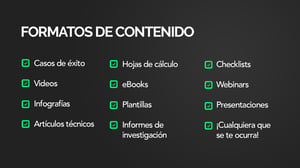 But what is the difference between all these formats? Well, not much.
You can tell the same story with almost all of them.
Choosing which format to use depends on who you are creating the content for, how much time you have to do it, and how much information you actually want to present.
Choosing the best format for your content will always have the sole purpose of satisfying your buyer personas. The information in the content is what helps people reach their goals, and the design is what makes it easily digestible or accessible to your personas.
Think for a moment. Is your buyer a visual learner? Then you might consider using an infographic. If you know they read your blog regularly, writing a blog post might work. If you have a piece of content that is particularly valuable, its place may be behind a form. Test different formats with your pieces of content and analyze which ones are performing best.
The final element of a piece of content is the topic of the content. What are you writing about? Choosing the topic for your content is one of the most important parts of content creation, and sometimes it can be the most complicated part, but it doesn't have to be.
To easily come up with the best topics for each piece of content you create, there are only 2 factors you need to consider. These 2 factors are the key to creating valuable content:
- Your Buyer Personas: Who are you trying to attract?
- The buyer's journey: What content will be most interesting or most useful to them at the different stages?
Knowing who your buyers are and what stage of the buyer's journey they are in are the keys to developing a good content strategy. To create valuable content, you must tailor it both to your buyers and to the specific point of the buyer's journey they are at.
If you do these 2 things, you will be perfectly ready to create valuable content that will transform your inbound efforts from acceptable to outstanding.
Buyer Personas are the target you want to attract, convert, close, and delight: they are your ideal customers. Your Buyer Personas are who you are creating content for.
Remember, the best content is the content your buyers want to read, share, and come back to. Keep that in mind whenever you create content. Interesting content is educational. The goal of your content is to solve your buyer personas' problems, and you can achieve this through education.
You can identify the topics they care about through keyword research. What do you want to stand out in? Internet forums, popular industry news, frequently asked sales and technical support questions, your Buyer Personas' goals and challenges.
The first step in creating content that causes a lasting reaction in readers is to have a more precise idea of who your readers are, particularly the ones you want to turn into leads and then customers. When you know who they are, you can create the right content that fits their needs perfectly.
What about the buyer's journey, and how does it relate to valuable content?
Well, the way you should define valuable content is by basing it on the solution, not the product. Valuable content isn't about your business or your product; it's about your potential customers: the problems they have and the answers they are looking for.
To be able to offer a solution, it is very important that you understand the problem. The Buyer’s Journey will help you achieve this.
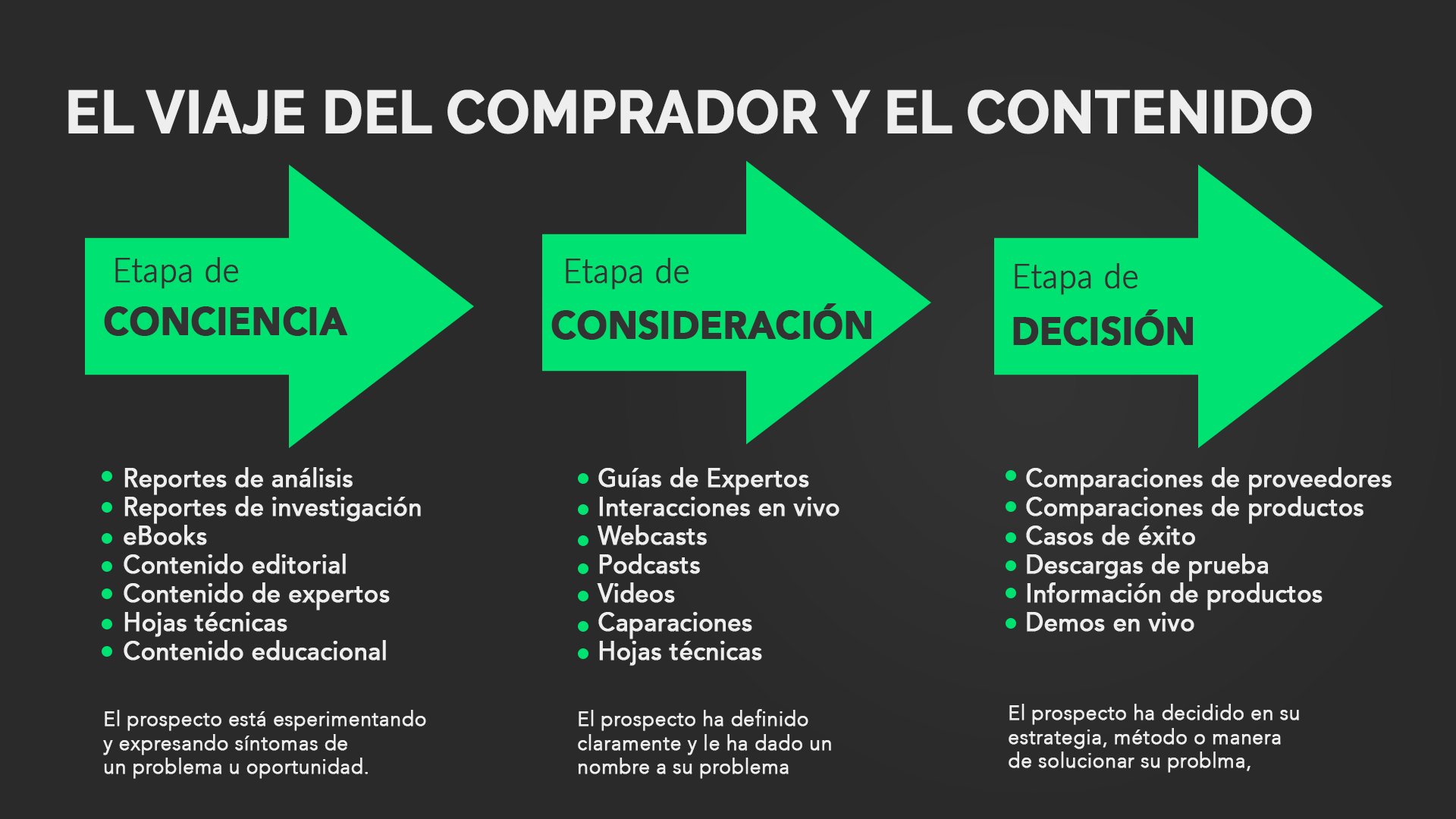
Your buyer's journey is the active research process people go through before making a purchase. It is like the purchase process or marketing funnel you may be familiar with, but from the buyer's perspective. The buyer's journey is made up of 3 stages: awareness, consideration, and decision.
They represent the research process of a purchase. Why should this matter to you as a content creator? When you create content, the buyer's journey is important because it can help you optimize the topic of your content, and it also helps you create content that is relevant to the specific stage of the buyer's journey your buyer is in.
What different content formats are used at the various stages of the buyer's journey? What type of content is appropriate for each stage of the buyer's journey?
It all comes down to the topic of your content and where it is positioned. Does your content focus on the problem your buyer has? That would be a piece of content for the awareness stage.
If your content is more related to the solution to a problem, then it would be content tied to the consideration stage.
And as for the decision stage, that is when you start creating content that explains your own service or product. It is when your prospect is looking for answers and you can offer them.
As you can see, you want to be constantly creating content for all the different stages of the buyer's journey.
The Best Content Formats for the Different Stages
Awareness Stage
When a prospect is experiencing and expressing symptoms of a problem, the following content resources are appropriate because they help educate your Buyer Personas: Analyst reports, research reports, eBooks, editorial content, expert content, technical articles, and educational content. All of these are excellent formats for content in the awareness stage. They are not about your solution but about your buyer's need or problem.
Consideration Stage
The prospect has clearly defined their problem and given it a name. Content resources at this stage should focus directly on the solutions that can help meet their needs. This way, you close the gap between educational resources and product or service information without involving your brand.
That is why expert guides, live interactions, webcasts, podcasts, videos, and technical articles work so well at this stage.
Decision Stage
The prospect has decided on their solution, or else is about to make a decision. The first resources at this stage require a more direct action or focus on the solution. Resources at this stage require a more direct action, starting from the sales opportunity.
They are ready to make a purchase (now that they are aware of their problem and have found an ideal solution), so it is time to show why you are the best of the best. Content in the decision stage should be focused on your own product or service, and you can do this using formats such as:
Vendor comparisons, case studies, trial downloads, product information and features, and live demos.
There are so many opportunities with the different types of content you can create!
Now remember that an eBook is not always a piece of content tied to the awareness stage. You can determine which point of the buyer's journey your piece of content fits best based on its topic, not its format.
In our next video, we will look at an example of how a company created content for each stage of the buyer's journey, so don't miss it. Subscribe to our YouTube channel and our newsletter!
And don't forget to follow us on all social networks; you can find us as @Digitalegia.
Don't forget to share this post!


