


We continue with the close stage of the inbound methodology, and today we'll look at the details that will give your emails a greater impact.
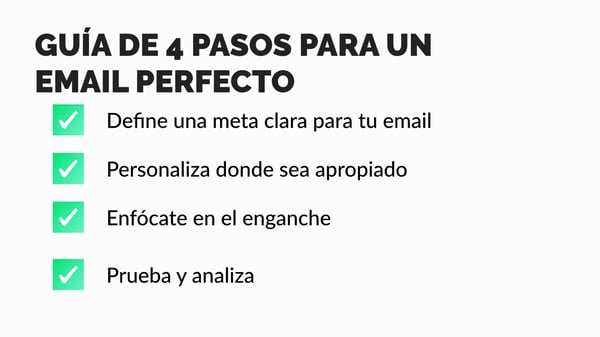
We call it the 4-step guide to a perfect email.
The best practices for a perfect email are divided into several segments: setting goals, personalizing, optimizing for engagement, and making sure everything in your email looks great.
Let's start with best practice 1:
1. Define a clear goal for your email. Why are you sending this email?
Consider this question: Which of these is an appropriate goal for sending an email?
- Getting people to register for a webinar
- Staying top of mind with people
- Promoting your company
- Increasing the average open rate
Eliminating 2, 3, and 4, we're left with: “Getting people to register for a webinar.” This is a very good example of an email goal. It's clear, and it can be measured through actions and quantified. Plus, you'll be creating a new list of prospects or qualifying the ones you already have.
This goes beyond clicks and opens; you have to consider what action you want your recipient to take. This is when you need to be very specific, which is why “Staying top of mind with people” won't work.
2. Personalize where appropriate.
Just because you're sending an email to 100, 1000, or even 1 million people doesn't mean it has to be impersonal.
You want to create the impression that you're speaking directly to your prospect. You don't want them to feel like you're sending the same email to hundreds or thousands of people; ideally, you should include their name and address them personally so they feel it's a one-to-one conversation.
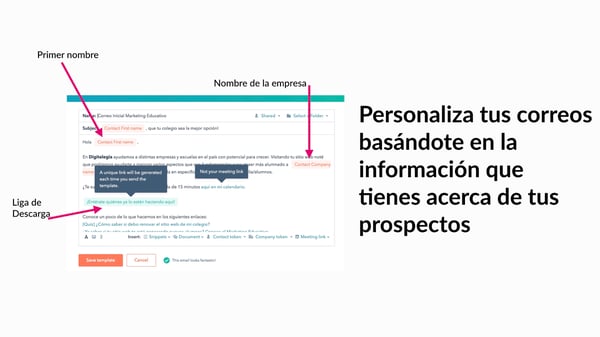
Personalization can have a big impact on your engagement. But don't take my word for it; look at these statistics:
- Prospects who have been nurtured and have received targeted content produce 20% more sales opportunities.
- 40% of customers buy more from online stores that personalize the shopping experience across their channels.
- Personalized emails improve click-through rates by 14% as well as conversion rates by 10%.
3. Focus on engagement
Whenever you write an email, keep in mind: “Time is money,” so get to the point! You need to be clear and compelling. Clear and compelling enough for people to act on it. This applies to both the content and the subject line of your email.
You shouldn't trick people into opening your emails; those practices haven't benefited anyone.
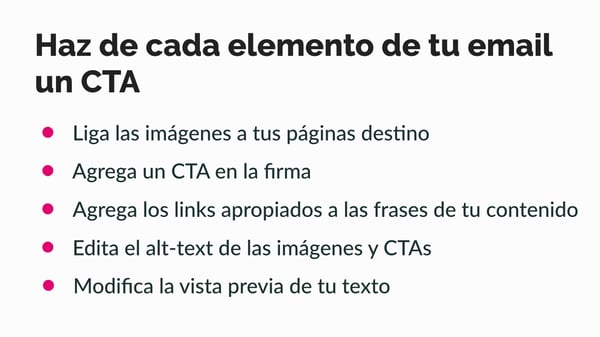
People have very short attention spans. Ask yourself: How many emails do you open, scan for two seconds, and then close? I know you've done it; don't deny it. Use action-oriented language that convinces prospects to take action. Use verbs in your CTAs like “Start,” “Get,” “Book,” “Attend,” “Download,” etc.
4. Test and Analyze
Since email marketing is important in every stage of the inbound methodology, you need to make sure you test and analyze your emails. Here are some data points worth measuring:
- Open Rate: Yes, it's good to know your open rate. But this metric only tells you how effective your email subject lines are, not the content itself.
- Click-Through Rate: This metric tracks people's engagement with your emails. Remember that clicks aren't valuable just because someone clicked. What really matters is what's on the other side of that click.
Also keep an eye on the people who unsubscribe from your list after receiving an email.
The last best practice is all about results. You can get even better emails if you run A/B tests.
Use them to learn more about your readers. You can also improve your total clicks: test the email first and then send the winning version.
Well, that's a lot of email marketing; just remember to define your email's goal, personalize it, focus on engagement, and test and analyze your emails so you can send increasingly successful emails.
In the next video, we'll see what a good email should look like, so I invite you to subscribe to our YouTube channel and turn on the notification bell so you'll be notified when we upload a new video.

Don't forget to share this post!
