

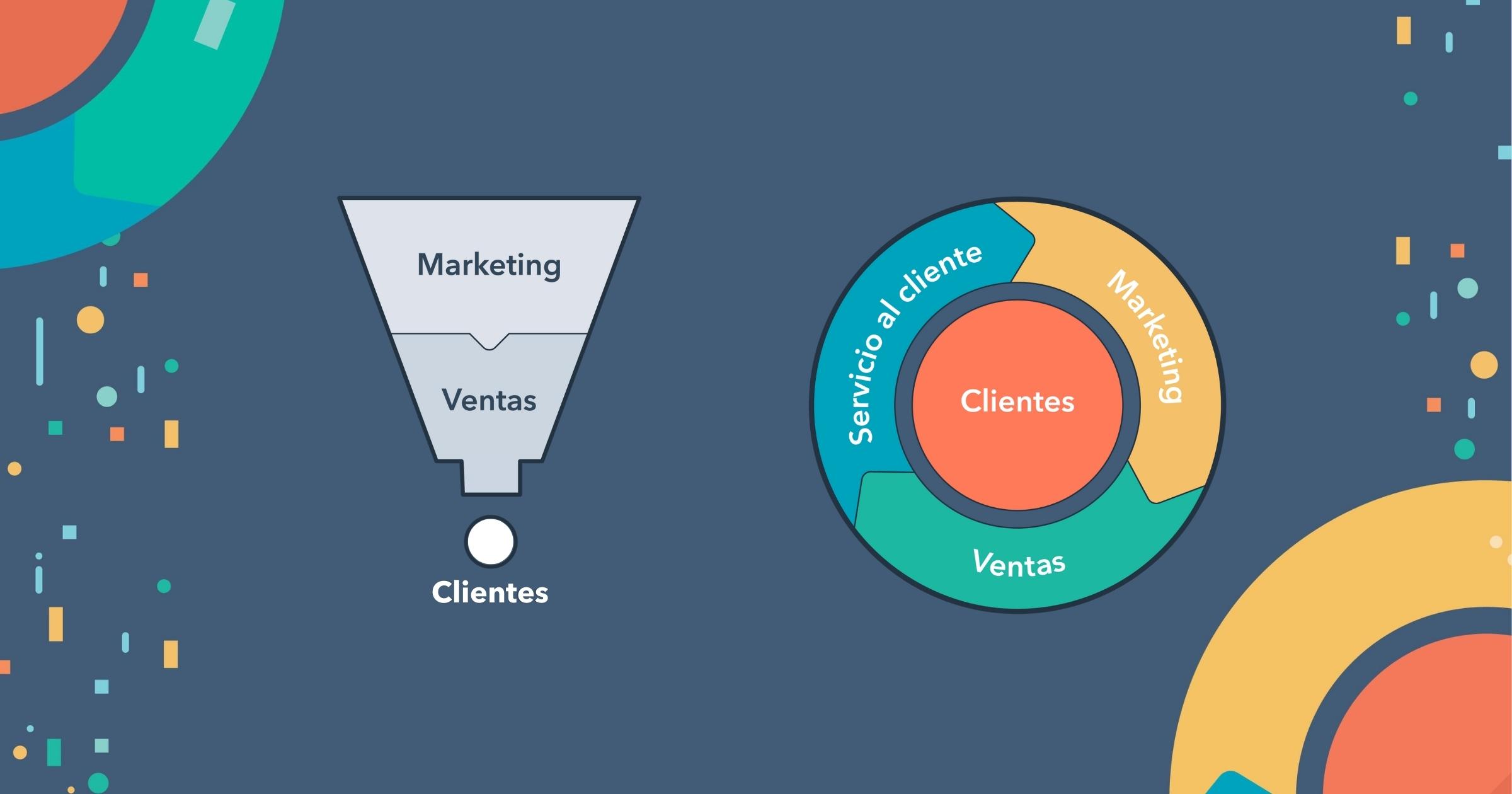
The sales funnel has always been very important when you build a marketing strategy, since it lets you see where your potential customers are in their journey, or what you can do to help them make it all the way through.
But there is also the flywheel, the new way of selling, where you need to learn how to delight and retain your potential customers so that they later help you sell.
If you don't know what a sales funnel or a flywheel is, don't worry: here you'll find answers to all your questions.
What Is a Sales Funnel?
A sales funnel reflects the path your prospects take to become customers. It describes discrete stages of the customer journey, from the first touch to the closed deal.
A sales funnel starts with a large number of potential buyers at the top. Toward the middle of the customer journey, the number of prospects narrows down to a handful of opportunities, and after the decision-making stage,
As each individual deal moves through each phase, the probability of closing the sale will change.
At this point, there is greater potential for that deal to ultimately succeed, unless the deal is moved to closed lost, in which case the probability drops to zero.
The sales funnel solves several problems for sales leadership:
- It was a clearly defined process for modeling how to close more deals.
- It helped quantify the value of future sales.
- It allowed sales teams to build statistics on the size and number of deals needed to mathematically exceed quota.
- The sales funnel helped define a methodology for teaching salespeople how to move customers through a logical sales process and closing sequence to maximize rep productivity and cost per lead.
How Do You Create a Sales Funnel?
1. Define the problem you want to solve for your customers.
For your sales funnel to work, you need to understand your audience. What are their pain points? Expectations? Interests? The more information you have, the better you'll be able to position your products and create intriguing offers.
2. Define your goals.
Now it's time to define your goals. These could include more leads, product demos, email newsletter subscriptions, or purchases.
3. Create a preliminary offer to generate leads.
It goes without saying, but before you can convert prospects, you have to capture their attention.
4. Qualify leads to confirm interest in the product.
Not all leads are created equal. Some may show interest but aren't a good fit for your company, and vice versa.
5. Nurture your qualified leads.
Picture this: a prospect visits your website. They click around and even fill out a form with their contact information, but then you do nothing and forget about them… That's why you need to nurture them and follow up.
6. Close the deal.
At this point in the funnel, the lead has either become a customer or decided not to make the purchase. Either way, it's important to keep the lines of communication open.
7. Track the final results and analyze your sales data.
Even the most qualified leads can fall through the cracks in your funnel.
Sales Funnel vs. Flywheel
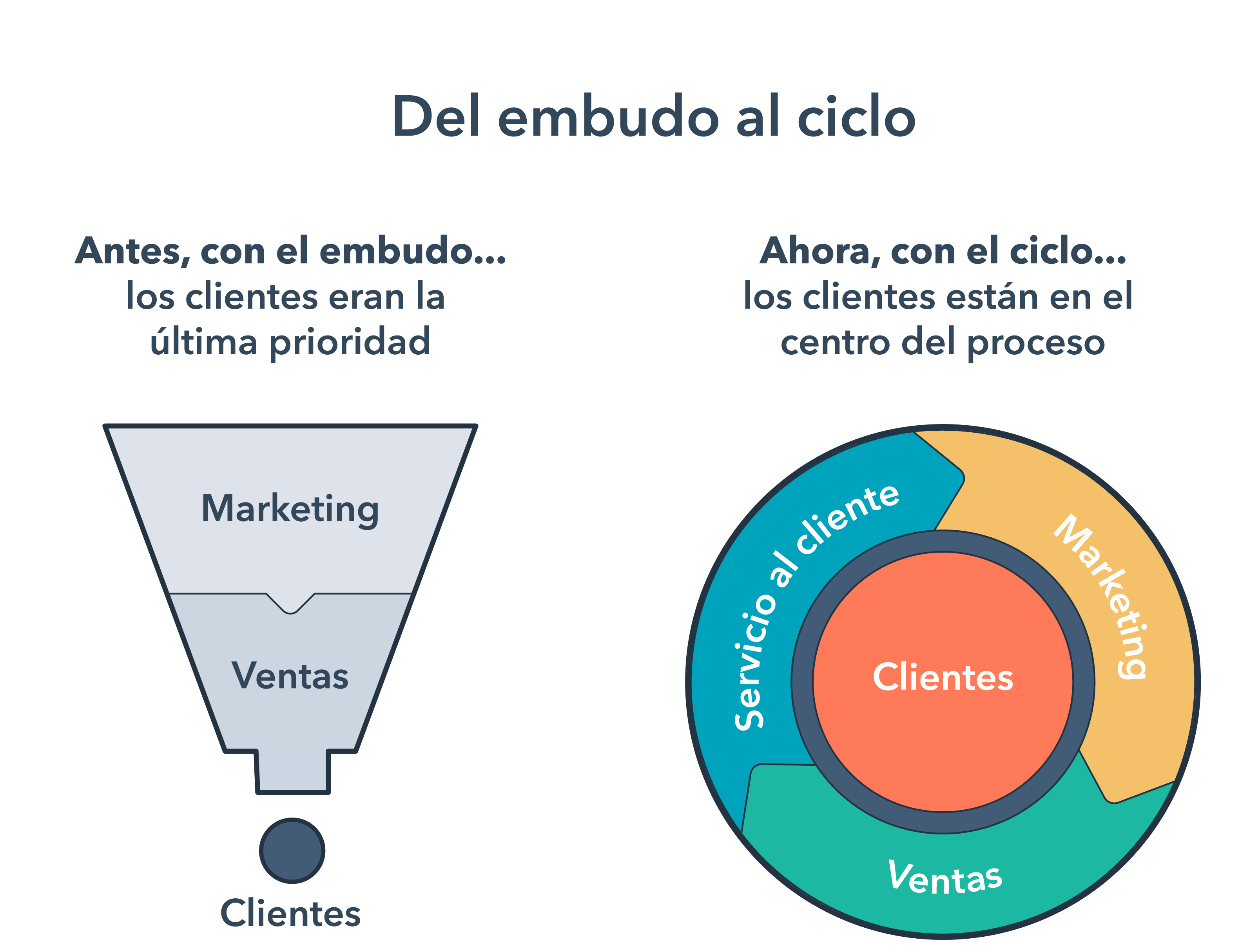
The modern sales process has changed dramatically in recent years, and those changes make the traditional sales funnel obsolete.
Today, customers are in control of the sales process. A modern buyer spends more time researching a purchase up front before committing to a salesperson, which reduces the value of sharing information.
How Does the Flywheel Work?
To spin your flywheel, you need to add force to it by making significant investments in strategies to acquire and retain customers.
Once you acquire enough initial customers and ensure their success and happiness, they become a force for your flywheel.
Using a flywheel, you can build a community or ecosystem of customers who help other customers. For a modern sales process, a flywheel is better than a sales funnel because it leverages current customers to attract and engage new prospects.
Conclusion
Both the sales funnel and the flywheel can help us create a sales strategy where the customer is the priority and also helps us in this process.
Knowing the parts of your funnel will help you understand where your buyer is in their journey, while the flywheel will help you retain them and get them to recommend you.
In either case, you need to keep in mind the nurturing your customers receive through both.

Don't forget to share this post!


